 By Isla Moreau, Style Editor
Reviewed & updated September 2026
The sweater vest went from punchline to genuine wardrobe staple, and it earned the spot. It's a layering piece that adds warmth and structure without sleeves getting in the way, and it works across preppy, minimalist, and slightly quirky styling. The trick is knowing what to put under it and how to handle proportions.
 Jump to a sectionCurated by Isla · 7 min read
- Why a sweater vest works
- Fit and proportion basics
- Outfit 1: Sweater vest over a button-down (the classic)
- Outfit 2: Sweater vest with a white tee (the off-duty version)
- Outfit 3: Sweater vest as the top (worn alone)
- Outfit 4: Sweater vest over a collared dress or shirtdress
- Outfit 5: Sweater vest with a blazer
- Colors and patterns that are easy to wear
- Common mistakes
- The takeaway
- Further reading & trusted sources
Why a sweater vest works
A sweater vest does the visual job of a sweater — adds a knit texture, a color block through the torso, a sense of being layered and put-together — but leaves your arms free. That makes it useful in transitional weather, in overheated offices, and for anyone who finds full sweaters bulky under jackets. It also draws the eye to the center of the body and the shoulders, which can balance out a wider lower half.
The two things that make or break a sweater vest outfit are fit and what's underneath. Fit-wise, you want it close enough through the body that it doesn't add bulk, ending at or just below the waistband. Underneath, a collar or a contrasting sleeve is what keeps it from reading like you're missing a layer.
Fit and proportion basics
- Length: The hem should hit right around your natural waist or an inch below. A vest that ends mid-hip fights with most bottoms and shortens the leg line.
- Armholes: Check that the armholes sit close to your body. Gaping armholes reveal the shirt underneath in an untidy way and add width.
- Snug, not tight: A fitted vest layers cleanly. An oversized one can work as a deliberate slouchy look, but pair it with slim bottoms so the volume stays on top.
- Tuck or half-tuck: If the vest is on the longer side, a front tuck into high-waisted bottoms restores the waistline.
Outfit 1: Sweater vest over a button-down (the classic)
Layer a fitted sweater vest over a crisp button-down shirt, collar and cuffs left out. Add straight-leg trousers or dark jeans and loafers. This is the reference outfit — it works for the office, for dinner, for almost anywhere with a dress code. A white or light blue shirt is the safe choice; a subtle stripe or check adds interest without effort. Roll the shirt sleeves to the forearm for a more relaxed version.
Outfit 2: Sweater vest with a white tee (the off-duty version)
Swap the button-down for a plain white cotton tee, short or long-sleeved. This immediately makes the vest casual. Pair with wide-leg jeans and white sneakers or chunky loafers. It's the outfit for weekend errands and coffee runs, and it's a good way to wear a bolder-colored or patterned vest without it feeling formal. A long-sleeve tee under a vest also solves cold-weather layering while keeping the look simple.
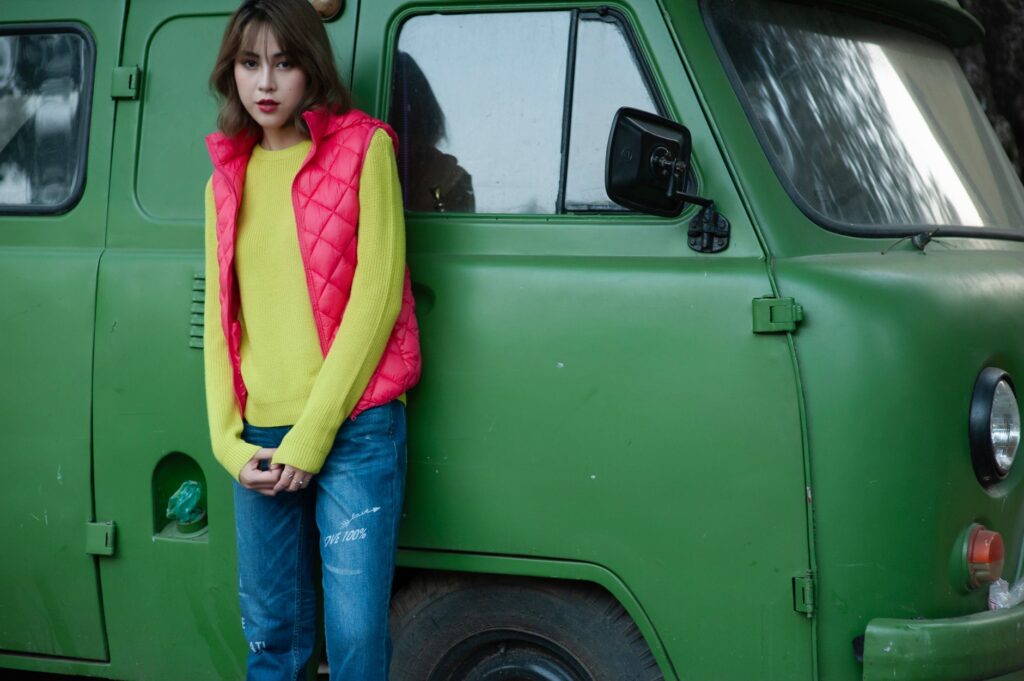
Outfit 3: Sweater vest as the top (worn alone)
A finer-gauge or slightly fitted sweater vest can be worn on its own, no shirt underneath, like a knit tank. Pair it with tailored trousers or a midi skirt and heeled sandals or mules for a warm-weather evening look. Keep everything else clean and structured so it reads as intentional. This works best with vests that have a higher neckline and closer knit; a loose or deep-armhole vest worn alone tends to look underdressed.
Outfit 4: Sweater vest over a collared dress or shirtdress
Layer a sweater vest over a shirtdress or a collared midi dress, letting the collar and the hem of the dress show above and below the vest. Add tall boots or knee-high boots in cooler weather, or ballet flats in spring. This is a high-return outfit — it looks considered, uses two pieces you already own separately, and the contrast of the dress hem under the knit is what makes it interesting.
Outfit 5: Sweater vest with a blazer
For a sharper look, add a blazer over the whole thing: button-down, sweater vest, blazer, trousers. The vest becomes a warm middle layer and a bit of texture peeking out at the neckline and hem. Keep the vest thin for this so the blazer still closes comfortably. Stick to a tight color story — navy, grey, cream, camel — so three layers don't turn into visual noise.
Colors and patterns that are easy to wear
Start with neutrals: cream, grey, navy, camel, black, forest green. These layer over almost anything. Argyle and fair isle are the traditional sweater vest patterns and lean preppy; a subtle cable knit reads more minimal. If you want a statement vest, keep the rest of the outfit in solids so the vest is clearly the focal point. Tonal dressing — a camel vest over a cream shirt with off-white trousers — is a reliably elegant route.
Common mistakes
- Too long. A vest past the hip bones is the most common problem. It shortens your legs and fights your waistband.
- Bulky knit under a jacket. A chunky vest plus a fitted blazer means the blazer won't close and the shoulders look overstuffed. Match the vest weight to the layer going over it.
- No collar, no contrast, no plan. A vest over a plain crew-neck long-sleeve in the same color can look like an unfinished sweater. Add a collar, a cuff, or a color break.
- Gaping armholes. If the shirt underneath is billowing out of the armholes, either size down the vest or choose a slimmer shirt.
The takeaway
The sweater vest is a genuinely versatile layer once you get the fit right: close through the body, ending near the waist, worn over something with a collar or a contrasting sleeve. Start with the button-down version, branch out to tees, dresses, and blazers, and keep the color story tight when you're layering. It's one of the more efficient ways to make a simple outfit look deliberately styled.
Frequently asked questions
What do you wear under a sweater vest?
A button-down shirt is the classic choice, with the collar and cuffs left out. A plain white tee (short or long sleeve) makes it casual, a collared dress or shirtdress makes it a layered look, and a finer-gauge vest can be worn on its own with nothing underneath.
Are sweater vests still in style?
Yes. After a big trend moment, the sweater vest has settled in as a lasting layering staple, especially in neutral colors and subtle knits. Classic versions in cream, grey, navy, and camel aren't tied to a single season.
How should a sweater vest fit?
Close to the body without being tight, with armholes that sit near your torso rather than gaping, and a hem that ends at or just below your natural waist. An oversized vest can work as a deliberate slouchy style, but pair it with slim bottoms.
Can you wear a sweater vest in summer?
Yes, in a lightweight cotton or linen-blend knit worn on its own like a top, with trousers, shorts, or a skirt. Skip heavy wool or chunky cable knits for warm weather.
Read next


Further reading & trusted sources
Where outfits usually go wrong
Hem length is where most sweater vest outfits quietly go wrong — a vest that drops to mid-hip shortens the leg line and fights every waistband, while one ending at or just above the natural waist is what makes the proportion read as intentional. The second giveaway is gaping armholes: if the shirt underneath billows out at the sides, the vest is either too big or the shirt too full, and no amount of tucking fixes it — it needs a slimmer layer underneath or a smaller vest.
Isla’s whole styling philosophy fits in one line: buy less, choose well, and make a handful of pieces work hard — chasing every trend is expensive and rarely chic. She curates The Style Edit’s outfit ideas and capsule guides around versatile, lasting pieces instead of fast-fashion churn. Because style is personal, she offers options and how-to-wear-it rather than rigid rules. AI tools assist the research and drafting; a human edits every piece for taste and accuracy, and we never fake a review.