 By Isla Moreau, Style Editor
Reviewed & updated September 2026
Ballet flats are having their biggest comeback in years — search interest is at a five-year high, and the runways have been sending them down every season. But they're also one of the trickiest shoes to style well. Get them wrong and they shorten the leg; get them right and they're one of the most versatile, polished shoes you can own. Here's how to make them work.
 What this guide coversCurated by Isla · 8 min read
Why Ballet Flats Are Back
The quiet luxury and "old money" aesthetic that's dominated the last few years in fashion naturally led back to ballet flats. They're understated, French-influenced, and effortlessly put-together — everything the current aesthetic calls for. The toe shape matters: pointed or almond toe flats are the flattering, fashion-forward choice right now. Overly square or very round toes feel more dated.
Colour-wise, classic black and nude/tan are the foundation, but the more interesting plays right now are ballet pink, chocolate brown, and red — all of which are appearing heavily in 2026 collections.
The Leg-Lengthening Rule
The single most important styling rule for ballet flats: match the shoe to your skin tone or your trouser colour as closely as possible. When there's a hard contrast between the shoe and your leg (dark shoes with bare skin, for example), the eye stops there — which shortens the leg visually.
A nude or skin-matching flat creates an unbroken line from leg to foot. This is why French women seem to wear nude flats with everything — it's not just classic, it's genuinely elongating. Black flats work the same way when worn with black trousers or dark hosiery.
If you love a colourful flat (red, cobalt, or ballet pink), pair it with a shorter hem — a midi or mini — so the shoe becomes the deliberate accent rather than a line that cuts the leg.
With Trousers
Ballet flats and trousers are one of the great classic pairings. A few specific combinations that work well:
Straight-leg or wide-leg trousers: wear the trouser long — just grazing or slightly covering the top of the flat. The elongated trouser line with a pointed flat creates a very clean, editorial look. This is the combination most associated with French-girl style right now.
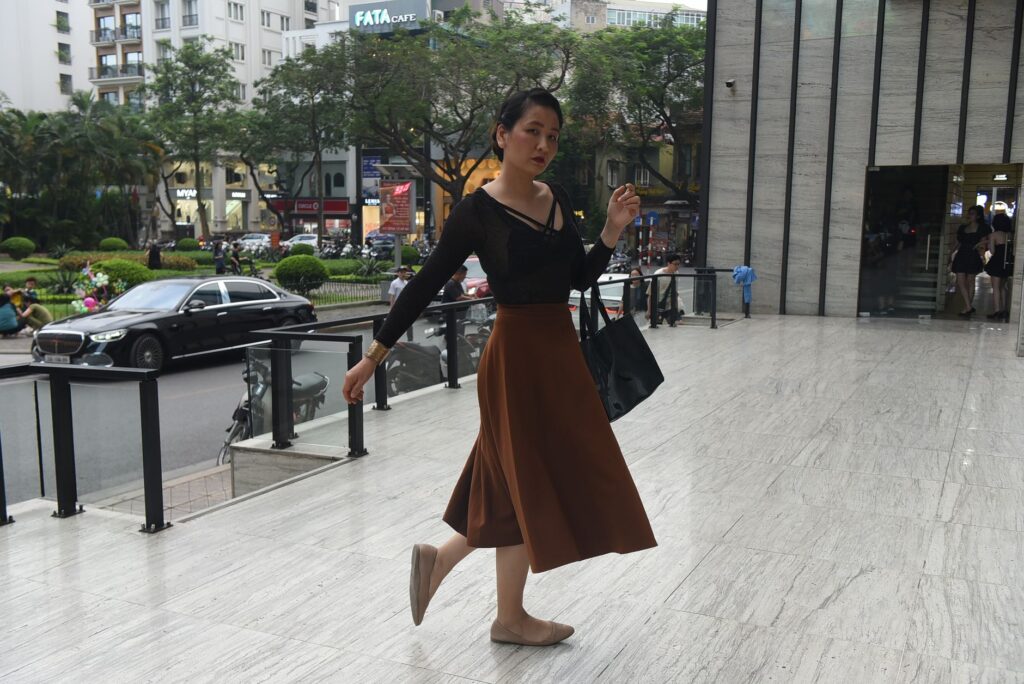
Cropped trousers: end the trouser at the ankle or just above. A pointed nude flat below a cropped trouser creates a clear, deliberate gap that reads as intentional rather than an awkward misfit. This combination is excellent for office dressing.
High-waist tailored trousers: one of the strongest pairings for ballet flats. The high waist creates the length that the flat doesn't, and the combination looks polished and confident.
What doesn't work: low-rise or mid-rise jeans cut at an unflattering point in the ankle. The proportions rarely come together in a way that looks deliberate.
With Dresses and Skirts
Ballet flats shine with dresses and skirts. The key is proportion.
Midi skirts and dresses (below the knee, above the ankle) are the most flattering pairing — the slight leg reveal at the ankle balances the flat's lower profile. Avoid hitting the widest part of the calf with the hem, which tends to look heavy.
Mini skirts and dresses work well with a contrast flat (coloured or metallic) because the shoe is visible and becomes part of the look.
Maxi skirts are trickier. Very long, floor-grazing hemlines can drag on flats and create a stumping effect. If you love the combination, add a heel — or choose a ballet flat with a slight platform (a growing trend) that gives a few millimetres of lift.
Wrap dresses in floral or solid — classic pairing. The ballet flat keeps the whole look feminine and effortless.
With Jeans
Jeans and ballet flats take a little more thought. The most successful combination:
Slim or straight jeans cuffed once or twice at the ankle, showing the top of the flat. This deliberate cuff signals the shoe; it doesn't look like the hem is too short. Pair with a tucked top or fitted blouse.
Dark wash jeans with a black or dark flat — the tonal approach that creates one clean line. Add a structured blazer or denim jacket for a very put-together casual look.
Avoid baggy or low-rise jeans. The proportion fights the flat. If you love oversized denim, opt for a boot or sneaker — the silhouette will look more coherent.
The Work Outfit Play
Ballet flats are an excellent alternative to heels for professional dressing. They look intentional and polished without the discomfort of a full day on heels.
For work: a pointed flat in black or nude with slim trousers and a structured blazer is a complete, elegant office outfit. The flat needs to be in good condition — scraped or dull flats read as tired; well-kept ones read as considered.
If your office is business casual, ballet flats in a metallic (gold or champagne) add interest without breaking the formality. They pair well with a matching-metal bag.
Care and Buying Tips
Ballet flats are one of the most quickly worn shoes — the toe tends to scuff and the heel lining compresses fast. A few things that help:
Buy half a size up from your normal size. Most ballet flats run slightly small and tight across the toe box, and a slightly roomier fit prevents the painful rubbing at the Achilles heel that makes many people give up on them.
Heel liners/grips (small self-adhesive pads at the heel) stop the slip-and-pop-off that's the main wearability complaint. They cost a few dollars and extend the life of the shoe significantly.
Leather or suede hold shape better than man-made materials over time. Budget flats in PU tend to crease and break down at the toe quickly. Invest slightly more in genuine leather if you plan to wear them regularly — they'll last years with basic care.
Rotate pairs. If you love ballet flats and wear them most days, two pairs worn in rotation last significantly longer than one pair worn daily. The material needs to recover.
Outfit Formulas That Always Work
- Black pointed flat + straight-leg black trousers + white blouse + gold jewellery → effortless polish
- Nude flat + midi floral dress + structured clutch → daytime elegant
- Ballet pink flat + white straight jeans + tucked striped top → French-girl casual
- Red flat + dark slim trousers + camel blazer → confident, bold professional
- Chocolate flat + cream or beige outfit → quiet luxury tonal dressing
The Takeaway
Ballet flats are genuinely versatile and flattering when styled with the right proportions. The two keys: match shoe tone to skin or trouser colour to elongate the leg, and pair with hemlines that leave the shoe visible as a deliberate element of the look. A well-kept pointed flat in black, nude, or a current accent colour covers most occasions — from office to weekend to evening casual.
Frequently Asked Questions
Do ballet flats work for wide feet?
Pointed ballet flats can feel tight across the forefoot in wide fits. Look specifically for "wide fit" or "round toe" options if you need more width, or size up and add an insole for the extra length. Stretching sprays designed for leather flats can also help ease the break-in.
Can ballet flats be worn in cold weather?
Yes — with tights or sheer hosiery. A denier 40–60 tight in black or nude is the classic pairing for autumn/winter. In very cold weather, a loafer or Chelsea boot tends to look more seasonally appropriate, but ballet flats with a thicker tight work well in mild cold.
Are ballet flats office-appropriate?
Absolutely. A pointed leather ballet flat in black or nude is considered professional in most business casual and even business formal environments. Condition matters — polished and intact reads as deliberate, worn-down reads as casual.
What's the difference between a ballerina flat and a loafer right now?
Ballet flats are more minimal and elegant — a simple silhouette without bulk. Loafers have hardware, weight, and a more structured shape, which reads as slightly more casual-academic. Both are strong in 2026, but they create different aesthetics and pair differently with outfits.
Read next
Related articles
- How to Style Knee-High Boots (15 Outfits That Always Work)
- The Best Ankle Boots to Wear with Everything
- The Best White Sneakers for Everyday Wear
- The Best Boots for Fall (Every Style You Need)
- The Best Loafers for Women (Comfortable and Chic)
- Comfortable Heels That Don’t Hurt (How to Find Them)
Further reading & trusted sources
Where outfits usually go wrong
The leg-shortening problem with ballet flats is solved by matching shoe tone to skin or trouser colour — a nude flat creates an unbroken line that visually lengthens, while a hard contrast between a dark shoe and bare leg stops the eye at the ankle. It’s the single reason French-girl styling leans so heavily on nude flats rather than a colour.
Isla’s whole styling philosophy fits in one line: buy less, choose well, and make a handful of pieces work hard — chasing every trend is expensive and rarely chic. She curates The Style Edit’s outfit ideas and capsule guides around versatile, lasting pieces instead of fast-fashion churn. Because style is personal, she offers options and how-to-wear-it rather than rigid rules. AI tools assist the research and drafting; a human edits every piece for taste and accuracy, and we never fake a review.