 By Isla Moreau, Style Editor
Reviewed & updated September 2026
Business casual sits in an awkward middle ground — too relaxed for a full suit, too polished for jeans and a t-shirt, and the exact line moves depending on the office. Once you understand the building blocks, though, putting together outfits that hit that middle ground gets a lot easier.
 Quick navigationCurated by Isla · 6 min read
What "business casual" actually means
Business casual generally means polished separates rather than a matching suit: think tailored trousers or a pencil skirt paired with a blouse, a blazer or cardigan layered on top, and closed-toe shoes. It's less rigid than business professional (which usually means a full suit) but more put-together than smart casual, which can stretch to include nice jeans in some offices.
Because the definition varies by company and even by department, the safest strategy in a new job is to slightly overdress for the first couple of weeks and adjust once you've seen what colleagues actually wear.
The core pieces worth owning
Tailored trousers in neutral colors (black, navy, gray, camel) form the backbone of a business casual wardrobe — look for a straight or slightly tapered leg that sits at your natural waist.
A well-fitted blazer instantly elevates a simple top, and a single well-made one in navy or black will work with almost everything else you own.
Blouses and button-downs in solid colors or subtle patterns give you mix-and-match flexibility without looking repetitive.
A pencil or A-line midi skirt offers a polished alternative to trousers for days you want a different silhouette.
Closed-toe flats or low heels read as more office-appropriate than sandals or sneakers in most business casual settings, though this line is loosening at more casual companies.
Five outfit formulas to build from
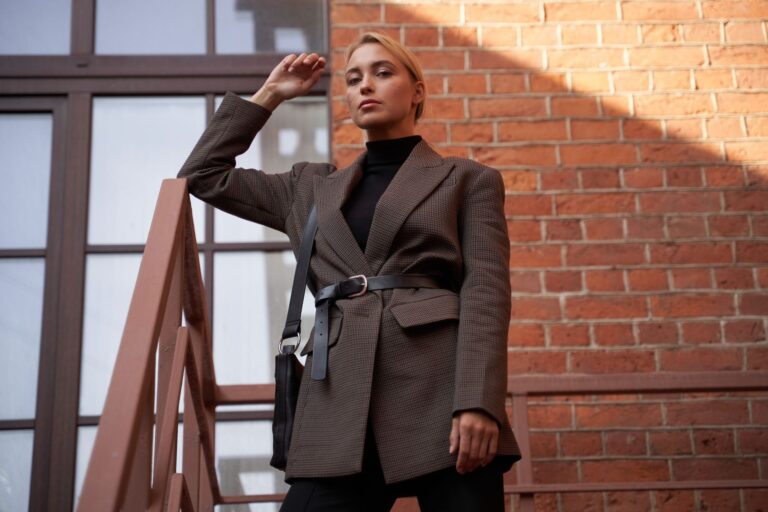
1. Trousers + blouse + blazer. The classic combination — tailored trousers, a tucked-in blouse, and a blazer left open or buttoned. Add a thin belt to define the waist.
2. Midi skirt + fitted sweater. Swap trousers for a midi skirt and pair with a fitted knit top for a softer, seasonal look. Works especially well in fall and winter.
3. Wide-leg trousers + fitted top. A wide-leg trouser balances a more fitted top on the upper half — keep one half loose and one half fitted for a proportional silhouette.
4. Sheath dress + cardigan or blazer. A structured, knee-length sheath dress with sleeves (or a blazer layered over a sleeveless one) is one of the fastest ways to look polished without assembling separates.
5. Dark denim (where allowed) + blazer + heels. In offices that permit denim, a dark, unripped straight-leg pair styled with a blazer and heeled loafers reads business casual rather than weekend-casual.
Color and pattern guidelines
Stick to a base of neutrals — black, navy, gray, camel, white — for your most-worn pieces, then use color through blouses or accessories to keep the wardrobe from feeling flat. This approach also means more of your pieces mix and match with each other, stretching a smaller wardrobe further.
Patterns work well in moderation: a subtle stripe, small check, or single statement print piece paired with solid neutrals looks intentional. Pairing multiple bold patterns together, however, tips into a look that feels more fashion-forward than office-appropriate for most business casual settings.
Seasonal business casual adjustments
Summer — lightweight trousers, sleeveless blouses (with a blazer or cardigan for meetings), and breathable fabrics like cotton and linen blends that don't wrinkle instantly.
Winter — layer with cardigans, sweater blazers, or a structured coat over your outfit for the commute; wool-blend trousers hold up better in cold offices than thinner summer fabrics.
Transitional seasons — a blazer becomes the most versatile piece of the year, worn over lighter layers in early fall and thicker knits as it cools down.
Common business casual mistakes
Treating "casual" as license for weekend clothes. Leggings, graphic tees, and flip-flops fall outside business casual at almost every office, even relaxed ones.
Ignoring fit. An oversized blazer or trousers that pool at the ankle read as sloppy even in expensive fabric — tailoring (even minor hemming) makes a bigger visual difference than the price of the garment.
Wearing overly casual shoes. Sneakers and flat sandals can undercut an otherwise polished outfit; closed-toe flats, loafers, or low heels are safer defaults.
Overdoing statement accessories. Save the boldest jewelry and bags for outside work — one statement piece (not three) keeps a business casual look from feeling costume-y.
The takeaway
Business casual comes down to polished separates built from a small set of neutral, well-fitted core pieces — trousers, a blazer, blouses, and closed-toe shoes — mixed and matched into different formulas throughout the week. Fit matters more than price, and a single well-made blazer will do more for the look than any individual trendy piece.
Frequently asked questions
Can I wear jeans for business casual?
It depends on the office. Some workplaces allow dark, unripped denim styled with a blazer and heels; others reserve denim for casual Fridays or don't allow it at all. When in doubt, ask or default to trousers.
Are sneakers ever okay for business casual?
In more relaxed, modern offices, clean minimalist sneakers paired with tailored pieces are increasingly accepted, but in more traditional workplaces they can read as too casual. Closed-toe flats or loafers are the safer default.
How many blazers do I actually need?
One well-fitted neutral blazer (navy or black) covers most situations. A second in a versatile color like gray or camel adds variety once the wardrobe basics are covered.
What's the difference between business casual and smart casual?
Business casual generally requires more structured pieces — blazers, tailored trousers, closed-toe shoes — while smart casual allows more relaxed items like nice jeans or stylish sneakers. The exact line depends on the workplace.
Read next


Further reading & trusted sources
Worth knowing before you buy
Fit is the detail that separates a polished business casual outfit from a sloppy one far more than fabric price does — an oversized blazer or trousers pooling at the ankle read as unfinished even in an expensive fabric, while a $15-20 hem adjustment on a budget piece can make it look twice its price. The safest opening-weeks strategy at a new job is deliberately overdressing slightly and then calibrating down once you’ve actually observed what colleagues wear, since underdressing in week one is much harder to walk back than the reverse.
Isla’s whole styling philosophy fits in one line: buy less, choose well, and make a handful of pieces work hard — chasing every trend is expensive and rarely chic. She curates The Style Edit’s outfit ideas and capsule guides around versatile, lasting pieces instead of fast-fashion churn. Because style is personal, she offers options and how-to-wear-it rather than rigid rules. AI tools assist the research and drafting; a human edits every piece for taste and accuracy, and we never fake a review.