 By Isla Moreau, Style Editor
Reviewed & updated September 2026
Dressing for your body type isn't about "fixing" anything — your body is great as it is. It's simply about understanding your proportions so you can choose clothes that fit beautifully and make you feel confident. I want to say this clearly up front because the old magazine version of this topic could make anyone feel like a problem to be solved, and that's nonsense. Think of everything here as helpful starting points, not rules. The best outfit is always the one you feel amazing in.
 What this guide coversCurated by Isla · 5 min read
- First, find your general shape
- Hourglass (balanced shoulders and hips, defined waist)
- Pear / triangle (hips wider than shoulders)
- Apple / round (fuller midsection, often slimmer legs)
- Rectangle / athletic (shoulders, waist, and hips fairly straight)
- Inverted triangle (shoulders wider than hips)
- The one principle behind all of it
- The principles that flatter everyone
- A note
- Related articles
- Further reading & trusted sources
First, find your general shape
Most people loosely fit one of a few shapes based on the balance of shoulders, waist, and hips. You might be a blend — that's normal, and most people are. Use this to guide, not to limit, your choices.
Hourglass (balanced shoulders and hips, defined waist)
Your waist is your natural focal point. Lean into: fitted and wrap styles, belted pieces, high-waisted bottoms, and tailored clothes that follow your curves. Be cautious with: boxy, shapeless pieces that hide your waist.
Pear / triangle (hips wider than shoulders)
Balance your proportions by drawing the eye up. Lean into: detailed or brighter tops, structured shoulders, boat and off-shoulder necklines, A-line skirts, bootcut and wide-leg trousers. Be cautious with: skinny bottoms in bright colours or heavy prints that add volume below.
Apple / round (fuller midsection, often slimmer legs)
Show off your legs and create vertical lines. Lean into: A-line and empire shapes, V-necks, open necklines, straight and bootcut trousers, and showing off your arms and legs. Be cautious with: tight waistbands and clingy fabrics across the middle.
Rectangle / athletic (shoulders, waist, and hips fairly straight)
Create curves and definition. Lean into: peplum tops, belts, ruffles and details at the bust or hip, wrap dresses, and layering to add dimension. Be cautious with: very straight, shapeless silhouettes head to toe.
Inverted triangle (shoulders wider than hips)
Balance by adding volume below. Lean into: A-line and full skirts, wide-leg trousers, details and prints on the bottom half, and softer necklines. Be cautious with: heavy shoulder details and very structured shoulders.
The one principle behind all of it
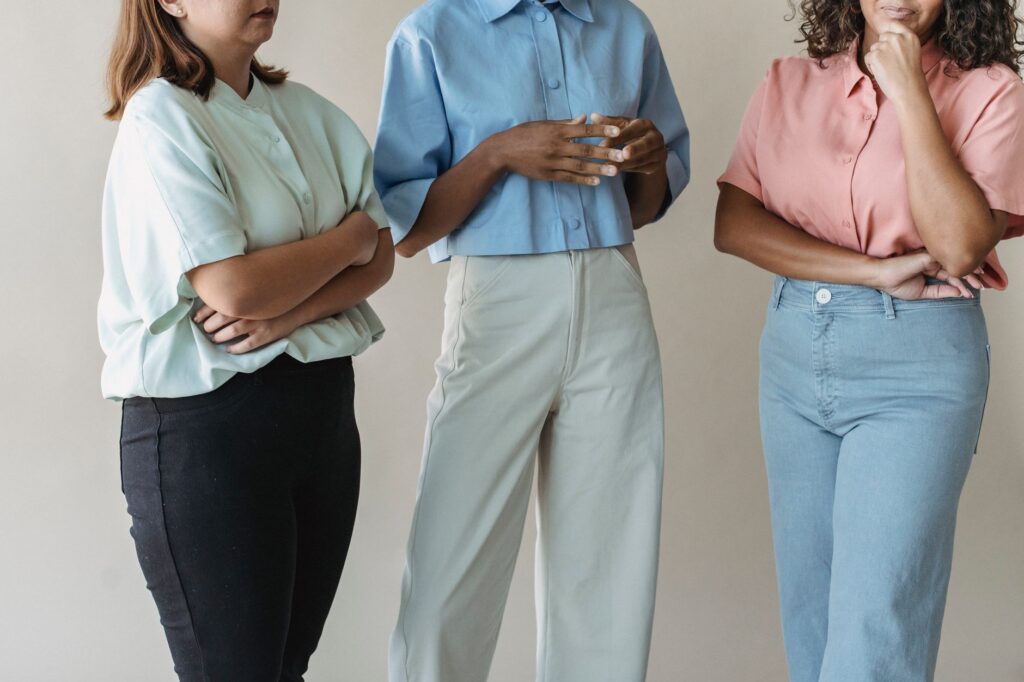
If the shape categories feel like a lot to remember, here's the single idea they all come from: balance and proportion. Every "lean into" above is just a way of evening out your proportions and drawing the eye where you want it — adding a little visual weight where you're narrower, defining a waist, or creating a long vertical line to elongate. Once that clicks, you don't need to memorise your "type" at all; you can look at any garment and ask, "does this balance my proportions and put the focus where I want it?" That's genuinely the whole game, and it's far more freeing than a rulebook.
The principles that flatter everyone
- Fit beats size. Well-fitting clothes always look better than a "correct" size that doesn't fit. Tailoring is worth it.
- Define a waist (with a belt, a tuck, or a fitted shape) to create a flattering silhouette on most bodies.
- Create vertical lines — V-necks, open layers, and monochrome looks — to elongate.
- Wear what you love. Confidence flatters more than any rule. If a "should" makes you feel worse, ignore it.
A note
Some links on our site are affiliate links, meaning we may earn a small commission at no extra cost to you — it never changes what we recommend. These are guidelines, not laws — your comfort and confidence always win.
Frequently asked questions
How do I know my body type? Look at the balance of your shoulders, waist, and hips. Many people are a blend of shapes — use the closest match as a flexible starting point, not a strict label.
Do I have to follow body-type rules? Not at all. They're helpful starting points for what tends to flatter, but personal preference and confidence always come first. Wear what makes you feel great.
What flatters every body type? Good fit, a defined waist, and vertical lines (like V-necks and monochrome looks) tend to flatter almost everyone. Tailoring makes the biggest difference of all.
Is there one simple rule instead of memorising my body type? Yes — aim for balance and proportion. Even out your proportions, define a waist, and draw the eye where you want it. Every body-type tip is just a version of that one idea.
Read next


Related articles
- How to Style a Midi Skirt: Outfit Ideas for Every Season
- How to Style a Denim Jacket: 10 Outfit Ideas
- How to Look Expensive on a Budget
- The Best Loafers for Women (Comfortable and Chic)
- Wardrobe Essentials in Your 30s
- Effortless Style Over 50 (Chic, Never Frumpy)
Further reading & trusted sources
Where outfits usually go wrong
Dressing for your shape is about where you draw the eye, not hiding anything — define your narrowest point and let the rest skim. Tents and shapeless layers add bulk rather than hide it.
Isla’s whole styling philosophy fits in one line: buy less, choose well, and make a handful of pieces work hard — chasing every trend is expensive and rarely chic. She curates The Style Edit’s outfit ideas and capsule guides around versatile, lasting pieces instead of fast-fashion churn. Because style is personal, she offers options and how-to-wear-it rather than rigid rules. AI tools assist the research and drafting; a human edits every piece for taste and accuracy, and we never fake a review.